 EN
EN

1. Field Realities: Discoveries Regarding High Friction Fluid Slurry Circulation
Managing the intensive fluid end deployment for a demanding deep-horizon project in the Permian Basin last season proved that running continuous drilling operations without specialized wear-resistant hardware quickly degrades your mechanical assets.
Our ground crew experienced an unexpected operational halt because standard low-grade sealing sleeves could not withstand the sharp particulate impacts found in dense mud matrices.
-
The Core Hazard: Forcing heavy solid-laden mixtures through generic unhardened chambers without calculating mechanical impingement variables causes severe gouging that ruins internal hydraulic pressures and destroys your project timeline.
-
The Solution: Once we reconfigured our fluid end assemblies with high-chrome alloy wear panels and robust dual-metal components, the entire pump lifecycle extended far beyond our initial estimates.
This direct field realization taught me that adopting premium, precision-engineered hardware components removes the volatility from heavy exploration schedules and protects your machinery. To maximize uptime across challenging geological layers, discovering how does a mud pump handle abrasive drilling fluids remains a foundational requirement for global field supervisors.
2. Tribological Mechanics of Solid Particle Impingement in Fluid Ends
Diving deep into the surface tribology and mechanical physics of high-pressure reciprocating mud systems reveals why standard materials fail rapidly under continuous solid-particle bombardment.
Micro-Scraping Mechanisms and Material Hardness
To thoroughly understand how a mud pump handles abrasive drilling fluids, engineering crews must inspect the micro-scraping mechanisms that occur when crystalline sand, barite, and drill cuttings are accelerated through internal valve chambers:
-
Micro-Gouging: The continuous velocity of these abrasive agents creates micro-gouges along the inner sleeve walls, which accelerates localized metal loss and ruins tight geometric sealing tolerances if the material hardness is insufficient.
-
Bi-Metal Protection: Selecting premium bi-metal liners that pair a rugged outer steel housing with a high-chromium cast iron inner sleeve provides optimal wear resistance because the inner matrix reaches a hardness level exceeding 60 HRC.
Furthermore, the reciprocating piston assemblies require continuous washing with an optimized cooling fluid to flush out trapped micro-grit before it can score the sealing lip. By analyzing these complex micro-abrasive stress profiles beforehand, drilling managers can implement robust component layouts that prevent premature pressure drops.
3. International Engineering Validation Protocols and Quality Benchmarks
According to strict equipment manufacturing and testing parameters established by global energy authorities like the American Petroleum Institute (API), maintaining standardized volumetric displacement integrity is a core requirement for modern sustainable exploration certifications.
Compliance Note: Integrating unverified, poorly balanced fluid components into high-pressure circulation loops causes uneven load distributions that accelerate systemic housing fatigue. This is why monitoring how a mud pump handles abrasive drilling fluids serves as a vital benchmark during the procurement verification phase.
Official drilling infrastructure manuals state that sourcing teams must meticulously verify the metallurgical consistency and heat-treatment certificates of their fabrication partners. Tracking these critical manufacturing origins keeps operational costs low across multiple deep-well cycles.
Technical validation specialists emphasize that deploying certified modular fluid end hardware avoids asset confusion while ensuring your rig floor remains fully compliant with strict international transport safety codes. Adhering to these global manufacturing benchmarks allows technical directors to guarantee total long-term operational transparency.
4. Systematic Maintenance Steps for High Erosion Processing Frameworks
Executing a highly reliable and completely secure fluid circulation routine requires following a strict sequence of practical maintenance steps to maintain component durability over long-term field usage:
-
Precision Extraction: Field technicians should always employ specialized hydraulic extraction tools when removing worn liners or valve seats from the fluid end block, ensuring they protect the precision-machined internal bores from accidental scratching or misalignment.
-
Vibration Distribution: When aligning high-volume mud processing modules or adjusting personalized piston wash lines, securing the underlying structural tie-down bolts tightly ensures that the entire moving grid distributes physical vibration loads evenly across the rig floor structure.
-
Digital Logging: Updating your physical maintenance records with detailed digital tracking logs stabilizes future workspace inspection intervals, allowing your engineering team to execute rapid component swaps without disrupting the main drilling pipeline.
Understanding these nuanced handling details ensures that site operators build robust maintenance workflows that survive continuous, high-pressure execution cycles.
5. Elite Engineering Sourcing Paths for Heavy Duty Drilling Operations
Achieving an exceptionally reliable, perfectly aligned, and highly profitable high-pressure circulation framework ultimately relies on sourcing your replacement parts from a trusted industrial pioneer dedicated to advanced material research.
This is precisely where our high-performance structural components at Juli Petro deliver massive strategic value. We offer:
-
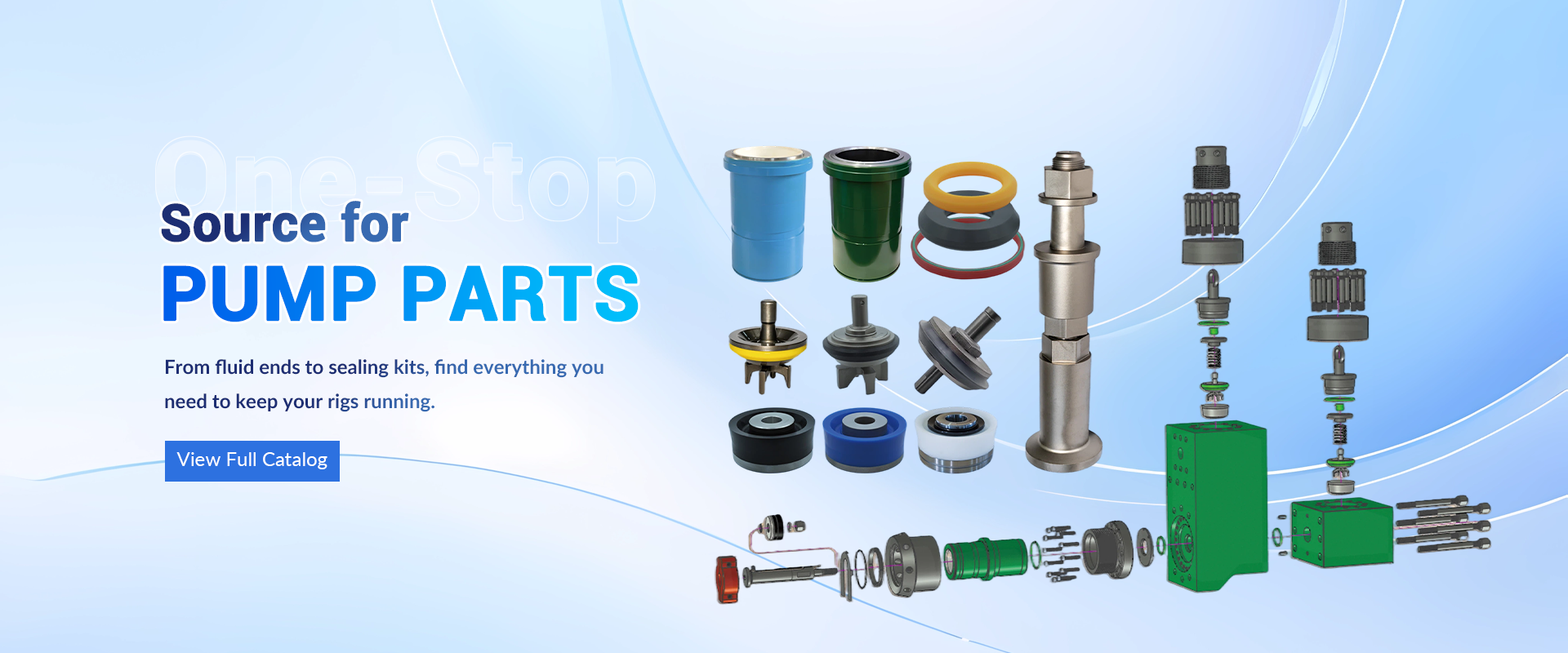
Top-tier bi-metal liners
-
Heavy-duty welded valve configurations
-
Precision-engineered fluid ends designed to help you effortlessly master fluid dynamics while upgrading your technical asset layout.
When international drilling operators implement our premium wear-resistant assemblies, they experience highly stable operating pressures, minimal friction-induced heat generation, and true dimensional roundness that allows for quick installation in any standard high-pressure pump frame worldwide. Our comprehensive commercial portfolio features premium-molded alloy components, robust corrosion-resistant surface coatings, and optimized geometric flow paths, making it easier than ever to secure your equipment investment under changing field demands. Relying on our specialized production capabilities ensures your rig infrastructure upgrades pass every strict transport safety audit with absolute perfection.
Table of Contents
- 1. Field Realities: Discoveries Regarding High Friction Fluid Slurry Circulation
- 2. Tribological Mechanics of Solid Particle Impingement in Fluid Ends
- 3. International Engineering Validation Protocols and Quality Benchmarks
- 4. Systematic Maintenance Steps for High Erosion Processing Frameworks
- 5. Elite Engineering Sourcing Paths for Heavy Duty Drilling Operations